This is a short version, please find a lot of information here
About
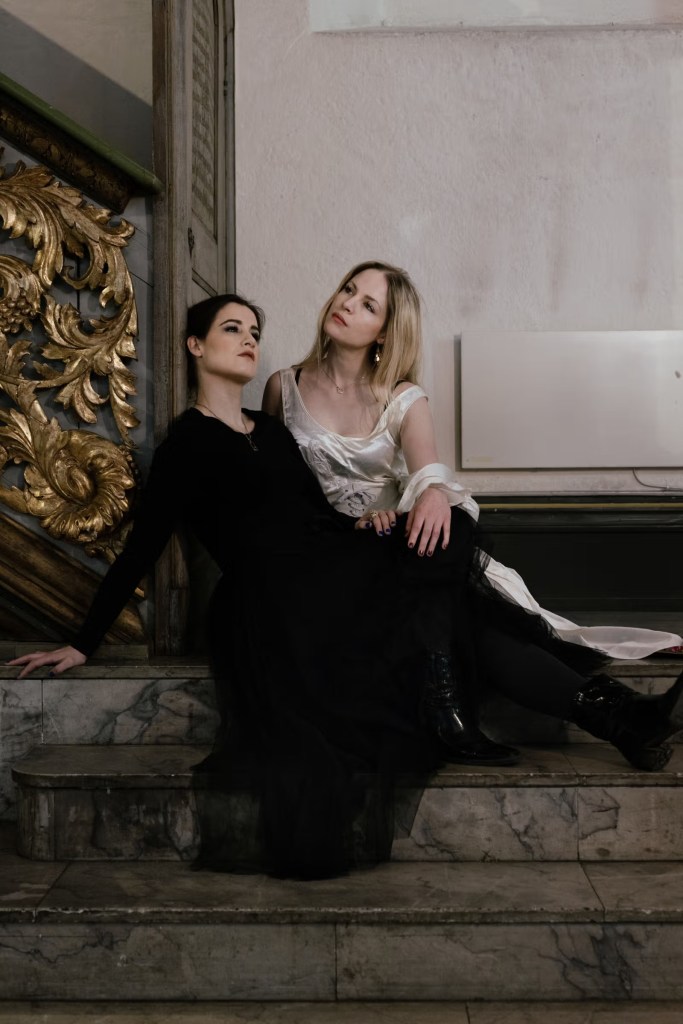
Composed by Solveig Sørbø, the opera Heroin Chic is loosely based on the novel of the same name by Maria Kjos Fonn. Praised as “a dark masterpiece”, its gloomy mood and religious undertones are continued and developed musically and dramatically in the opera, with themes such as longing for death, addiction and self-staging.
For the main character “Elise”, her fate – an early death that will return her to the emptiness before conception – is more important than life. Among the characters we also find the mother who fails to see Elise as anything other than a little angel, even when she reaches puberty and becomes a drug addict; the sleazy singing teacher; the rocker “Joakim” who loves Elise as she is, but unfortunately also introduces her to drugs; and “D” who represents Elise’s destructive subconsciousness.
Elise as a child is also present throughout – as a herald of fate at the beginning, as child Elise in the first scene, as a meta-figure who causes Elise’s last word “sola” (in an Ibsenian light referring to Ghosts). She also returns as the ghost of childhood towards the end, where we do not know for sure whether the mother kills her, or we have all been transported into Elise’s drugged-up fantasy about herself, which includes resurrecting and singing a dramatic lament in her own funeral.
While Elise is coloured by everyone else’s gaze, lacking agency, the non-extant Little Elise uses hers to help fulfil the destiny of non-existence. Does the idea that Elise will die come from Little Elise, from her mother or from destiny itself? Heroin Chic is quite melodic new classical music, somewhere between avantgarde and pop culture.
Cast
We have a hand-picked team of singers, musicians and conductor, should you want to collaborate.
Roles for singers
- Elise (soprano)
- Elise’s mother and Bereaved mother (mezzo-soprano)
- Little Elise (girl soprano)
- Joakim / Singing teacher (tenor)
- D (bass)
- SATB Choir (optional)
The Sinfonietta / Orchestra (adaptable)
1st violin (concert master), 2nd violin, viola, violoncello, 5 strings double bass, flute / piccolo, horn, cimbalom, 3 percussionists (glockenspiel, vibraphone, tubular bells, five-octave marimba, cymbal, triangle, temple blocks, bass drum, tam-tam), piano, harp, synthesizer and organ (can be replaced by synth when needed). One player on each voice is enough, however it would be advantegous with a larger string section (5, 4, 3, 3, 2 or full). Conductor.
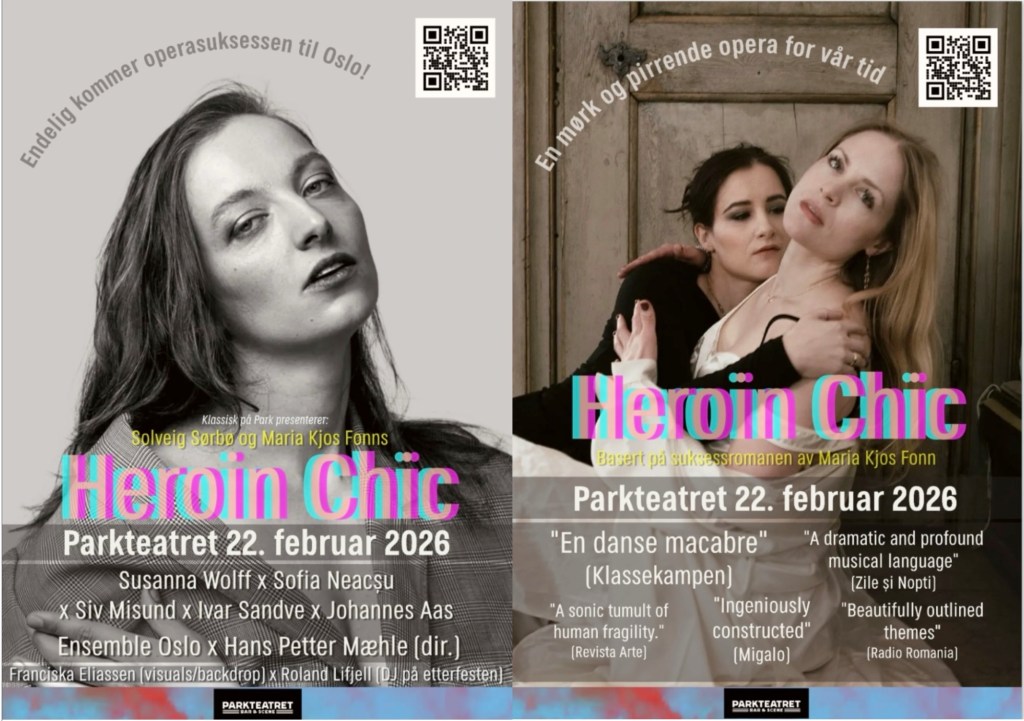
 Solveig Sørbø